The short answer
Our team regularly speaks with homeowners who are unsure what counts as a plumbing emergency in the middle of the night. That hesitation often leads to unnecessary stress or avoidable property damage.
When you wonder, is this a plumbing emergency, the dividing line comes down to immediate damage potential. A situation is critical when it causes active flooding, makes the house unsafe, or turns a simple repair into a total replacement.
We know that the national average cost for water damage restoration falls between $1,143 and $4,422.
That is exactly why emergency plumbing services exist around the clock. Let’s look at the data and clarify a plumbing emergency vs not so you can sleep soundly.
True emergencies: call now
A true emergency involves any uncontrolled water flow, complete loss of utility, or immediate health hazard. You must act quickly to shut off the source and call for help.
Active Leaks and Flooding Risks
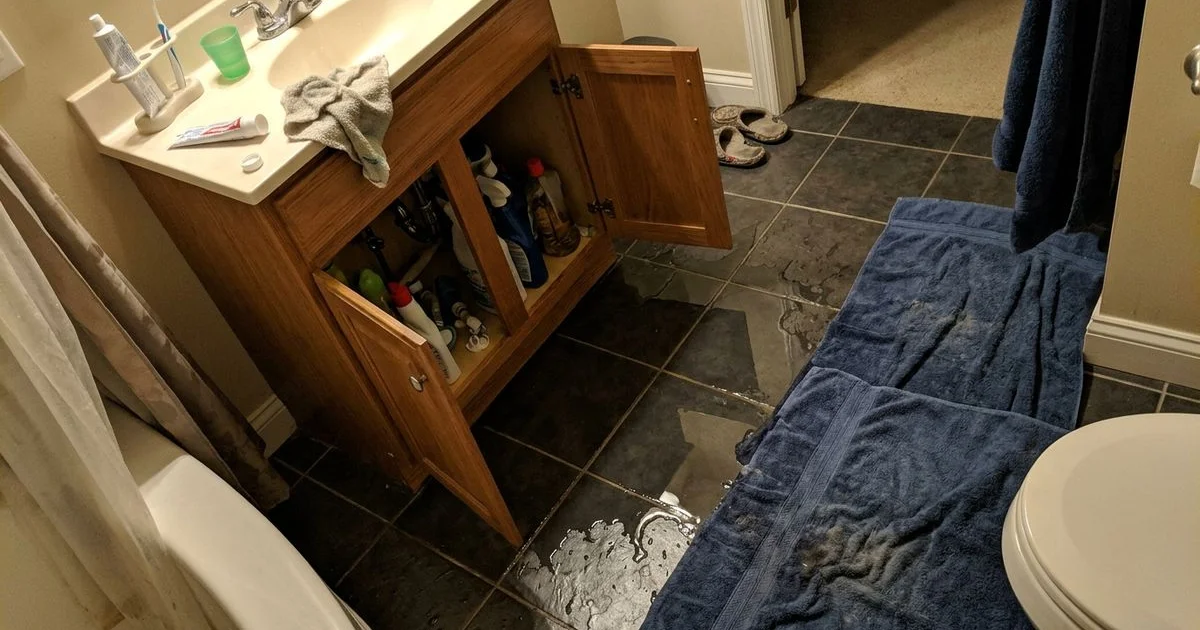
Water volume drives massive property damage. A burst pipe or any active leak you cannot stop requires immediate attention.
We see severe overnight burst pipe events cost homeowners up to $70,000 in structural repairs. Shut the main valve immediately and call for backup.
A failed shutoff valve is another same-night fix. If you cannot stop the water at the main, you have no way to control the current disaster.
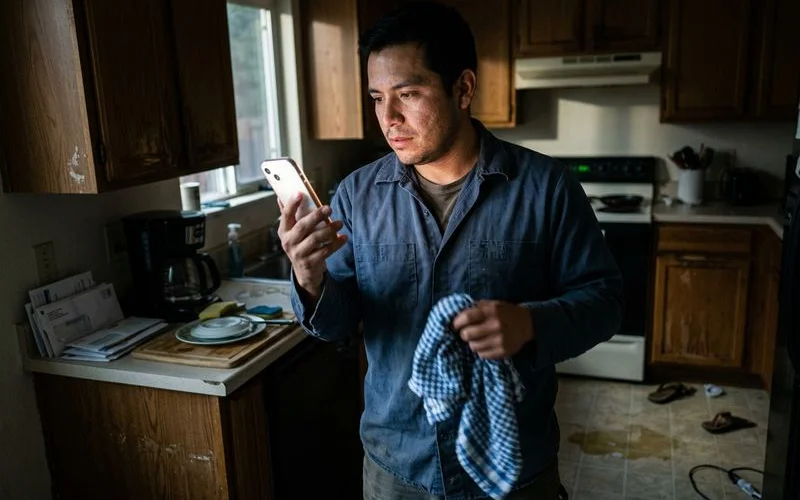
A leaking water heater also falls into this category. Tank failures can dump 40 to 50 gallons of water onto your floor in a matter of minutes.
Our technicians recommend closing the cold inlet valve and shutting off the gas or breaker right away.
Safety and Health Hazards
Sewer gas indoors is a severe health risk. Persistent rotten-egg odor indicates the drain system is venting hydrogen sulfide directly into your living space.
We take this seriously because the Occupational Safety and Health Administration sets the permissible exposure limit for hydrogen sulfide at just 10 parts per million. Concentrations over 100 ppm can paralyze your olfactory nerve, meaning you stop smelling the gas just as it becomes life-threatening.
Any leak near electrical panels is a massive safety hazard. Water reaching outlets or appliance connections creates an electrocution risk before it is even a plumbing problem.
Complete Loss of Function
Having no water at all makes the house completely unusable. This issue could stem from a seized main valve, a failed pressure regulator, or a utility-side problem.
We recommend calling immediately because some causes deteriorate rapidly with time. A main line backing up into the house is equally urgent.
Water rising in a shower or floor drain when you flush means the blockage sits downstream of every fixture. Stop using water completely, because every flush adds to the raw sewage coming back up.
If you are not sure, call and ask
We would rather answer a two-minute question for free than see the same house tomorrow with three rooms of wet flooring. Describing it out loud usually resolves the question fast.
What can wait until morning
Plumbing issues isolated to a single fixture without any active flooding or safety risks can wait until morning. These annoyances waste water but will not destroy your house overnight.
Isolated Fixture Annoyances
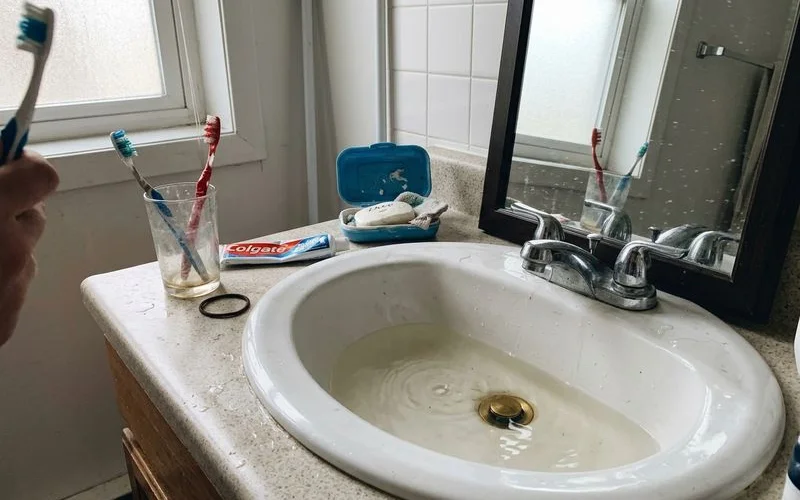
A single slow drain or a clog that clears with a plunger is a branch line issue. This means the problem is restricted to one sink or tub rather than your main sewer line.
Our plumbers consider this frustrating but not urgent.
A dripping faucet is definitely worth fixing, but it will not flood anything while you sleep. The Environmental Protection Agency notes that a leaky faucet dripping once per second wastes about 3,000 gallons of water per year.
We suggest placing a bowl under it for the night and addressing it tomorrow.
A running toilet falls into the same category. Small toilet leaks can waste up to 200 gallons a day, which adds roughly $475 to a quarterly water bill.
Shut the angle stop behind the toilet if the noise bothers you.
Pressure and Temperature Disruptions
Having no hot water without a visible leak is uncomfortable but not damaging. This can usually wait until morning instead of a midnight emergency call.
We often find that pilot lights go out or heating elements fail without causing any structural harm.
Low pressure at one fixture is usually caused by a scaled aerator or a bad cartridge. Hard water is very common in this valley and creates mineral buildup over time.
Our team treats single-fixture pressure drops as routine maintenance rather than emergencies.
The grey areas
Grey areas are plumbing symptoms that signal an approaching failure but do not pose an immediate overnight flood risk. These issues require scheduled professional attention to prevent a future disaster.
Warning Signs of Impending Failure
Low pressure everywhere in the house is a major signal worth acting on. Whole-house pressure loss in an older El Centro home often means the galvanized supply pipes are corroding closed from the inside out.
We know that galvanized steel pipes typically last 40 to 80 years in the US. Consider this timeline for older homes:
- Homes built before 1960: Pipes are likely past their end-of-life.
- Homes built in the 1960s: Pipes are entering the critical failure window right now.
- Homes built in the 1970s: Pipes often show severe internal rust and scale buildup.
Our guide on no water in the house covers how to tell the difference between a pressure problem and a utility supply failure.
A drain that keeps backing up is another pattern to watch. Each individual clearing might not be urgent, but the recurring pattern is a problem because a line that clogs three times a year usually has a break or offset that is getting worse.
Slab Leaks and Structural Risks
A slab leak is a hidden problem under your concrete foundation. By the time you notice a warm spot on the floor or a spiked water bill, the leak has probably been running for weeks.
We see slab leaks frequently in Southern California due to expansive clay soil and thousands of minor earthquakes each year. Waiting one more night rarely changes the outcome.
You should call in the morning, or call sooner if you can hear water running with all fixtures turned off.
| Slab Leak Symptom | What It Indicates |
|---|---|
| Unexplained Water Bill Spike | Hundreds of gallons are escaping underground daily. |
| Warm Spots on Flooring | A hot water line has ruptured beneath the concrete. |
| Faint Hissing Sounds | Water is actively spraying from a pressurized pipe. |
| Wall or Floor Cracks | Water has eroded the soil supporting your foundation. |
How our phone triage works
When you call, the answering team uses a specific triage process to determine if you need immediate dispatch or a scheduled visit. This system prevents you from paying for an emergency night call you did not actually need.
We ask four specific questions to sort your situation out quickly:
- What exactly is happening with the plumbing?
- How long has this issue been going on?
- Where in the house is the problem located?
- Is the main water supply currently turned off?
Those answers dictate our next move. If it is a true emergency, a plumber heads out with the right equipment already loaded.
Our dispatchers know that residential pressure regulators typically fail every 4 to 7 years, so identifying a high-pressure blowout early helps us bring the right replacement parts immediately.
If shutting the water off will stop the damage while you wait, we walk you through finding and closing the valve on the phone.
We provide this exact same triage process in English or Spanish at any hour, anywhere in Imperial County. Keep our 24/7 El Centro plumbing line handy, and do not hesitate to call if you are ever in doubt.