We often see homeowners scrambling after a sudden pipe burst or a total loss of hot water pressure. Dealing with an active plumbing emergency forces you to make major choices fast.
A galvanized vs pex repipe comparison is exactly what you need to understand right now.
The team handles these exact scenarios across the Imperial Valley every single day. The hard data clearly points to aging infrastructure as the root cause. Let’s explore the timeline of failing pipes and walk through the exact replacement steps you should take.
Why mid-century galvanized fails
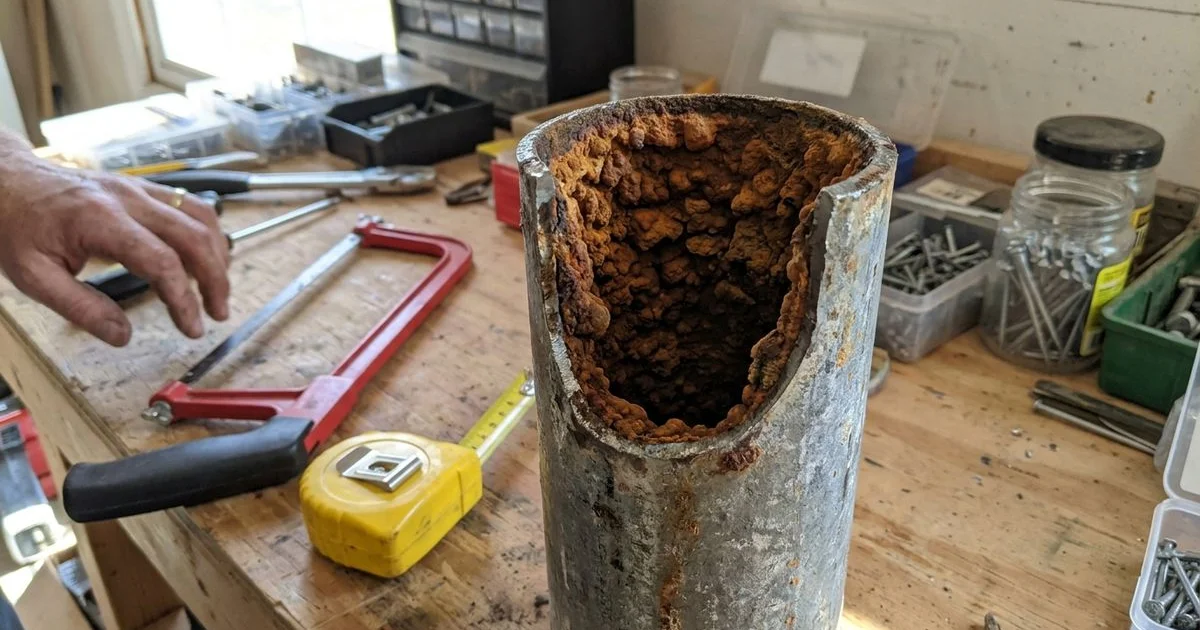
Galvanized steel supply lines typically expire after 40 to 50 years of use. Central El Centro carries a large share of homes plumbed between roughly 1940 and 1970, which means those original pipes are now well past their safe operational lifespan. We regularly pull out pipes from these decades that are completely choked by internal rust.
The protective zinc coating on galvanized steel simply wears away from the inside over the decades. Once that barrier is gone, the exposed steel corrodes into a rough, layered buildup called tuberculation. Plumbers in this market see this rust grow inward until the pipe chokes off the water flow.
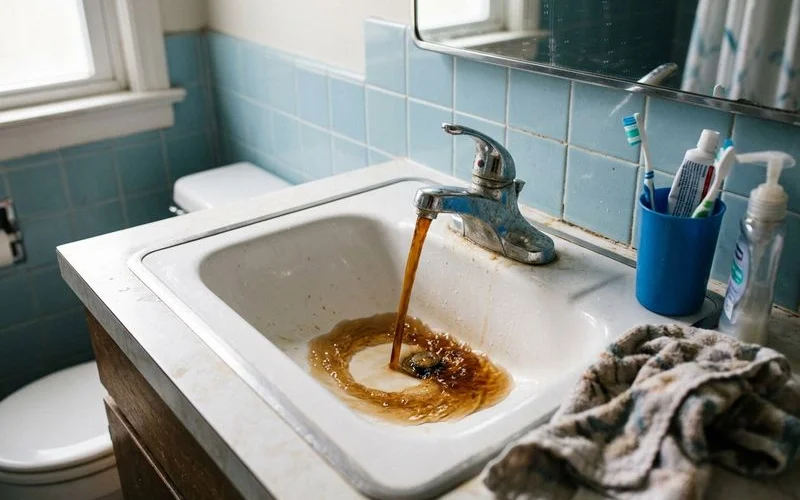
Two major problems follow this internal decay. The pipe’s internal diameter shrinks drastically, which strangles your water pressure everywhere at once. We know that rust particles also break loose into the water supply. This is exactly why the first draw of the morning runs tinted after the water sits overnight.
Hard water makes the deterioration happen much faster. El Centro water hardness averages around 20 grains per gallon (340 to 350 mg/L), which is extremely hard. This high mineral scale layers on top of the corrosion and builds the restriction faster. The plumber find that this specific combination creates several distinct failure points.
- Lost zinc protection: The internal barrier completely vanishes after four decades.
- Tuberculation blocks flow: Thick rust layers grow inward and choke the water supply.
- Mineral scale accelerates decay: Extreme 25-grain water hardness rapidly hardens the internal blockages.
The symptoms that say “system,” not “fixture”
Whole-house plumbing failures show up as widespread pressure drops and recurring leaks rather than isolated drips. A single slow faucet usually just needs a new aerator or cartridge. The symptoms below indicate your entire supply network is failing. We use these specific warning signs to diagnose the health of your home.
- Low pressure at every fixture, not just one.
- Rust-colored water on first draw that clears after running for a minute.
- Pressure that drops sharply when a second fixture is opened.
- Visible corrosion or weeping at threaded joints, especially in a garage or crawl area.
- Pinhole leaks appearing in more than one place over a year or two.
- Repeated repairs in different sections of the house.
That last point is the clearest signal of a dead system. When separate runs start failing independently, the whole network is at the exact same point in its life. Patching older pipes quickly becomes a costly subscription service. Our leak detection and repiping work shifts from fixing simple drips to replacing the entire pipe network at this stage.
A single Category 1 clean water leak costs between $3.50 and $4.50 per square foot just for the drying process in 2026. This means one hidden pinhole leak can easily cause thousands in water damage. If leaks are also appearing under the slab, our guide on slab leak signs covers that overlap. We always advise homeowners to replace the system before a catastrophic blowout happens.
PEX vs copper vs staying put
PEX piping offers the best combination of affordability and durability for older El Centro homes. Upgrading your plumbing requires choosing between flexible plastic tubing and rigid metal lines. Staying put is rarely an option when galvanized lines reach the end of their 50-year lifespan. We strongly recommend evaluating the materials based on the local hard water conditions.
Galvanized vs pex repipe cost comparisons
| Feature | PEX-A | Copper | Existing Galvanized |
|---|---|---|---|
| Install disruption | Lower, flexible runs need fewer wall openings | Higher, rigid runs and soldered joints | None today, massive damage later |
| 2026 Labor cost | $3.50 to $7.00 per sq ft installed | $8.00 to $14.00 per sq ft installed | Extremely high emergency fees |
| Hard-water pitting | Not affected | Susceptible over decades | Already failing |
| Freeze tolerance | Good, expands without bursting | Splits easily | Splits easily |
| Soil movement tolerance | Flexible | Rigid | Rigid and brittle |
| Expected service | 50+ years | 50+ years | Already past expiration |
PEX-a barrier pipe is what we usually recommend for these houses. This material runs through existing wall cavities with far less demolition. It does not pit the way copper does in our 20-grain hard water. Our installation teams prefer PEX because it tolerates the small foundation movements that this valley’s soil imposes.
A PEX vs copper repipe comparison often comes down to structural layout. Some property owners simply prefer metal, and it installs cleanly where rigid runs fit. It costs significantly more in both material and labor. We know that copper prices hover around $8.00 to $14.00 per square foot installed in 2026.
Polybutylene deserves a quick mention because homes built in the 1980s and early 1990s might have it. This gray plastic pipe inevitably fails at the fittings. Insurers heavily dislike this material and will often deny coverage. The plumber treat polybutylene as a replace-on-discovery material rather than a repair-as-needed one.
Whole-house or spot repair
Spot repairs only make financial sense for isolated accidents, while a whole house repipe cures systemic failure. Choosing between a patch and a total replacement comes down to simple math and risk tolerance. You are gambling with your drywall and flooring every time you ignore an aging system. We evaluate the entire property to help you make the smartest financial decision.
Spot repair makes sense when there is a single accidental failure. The rest of the system must show good pressure and clear water. This approach is only viable if the home is not uniformly plumbed with old galvanized steel. We will happily fix a single broken joint if the surrounding pipes remain structurally sound.
Whole-house makes sense when pressure is down everywhere and first-draw water is tinted. Multiple leaks over a short period demand a complete replacement. A pre-1970 house with original galvanized pipes is always a candidate for a full repipe. National insurance data shows average water damage claims hitting $12,500 in 2026 due to ignored warnings.
The long-term math is definitely not subtle. Each spot repair carries its own access, labor, and drywall patching costs. A typical spot repair often costs between $450 and $800 just to fix a single leak. Three of those emergency bills over two years usually exceed a large portion of a planned replacement. You still have an old, fragile system afterward.
Do it while the walls are open
If you are already remodeling a bathroom or kitchen in an older house, that is the cheapest repipe you will ever get. Much of the access cost is already being paid by your remodeling budget. This simple overlap can save you up to 30% on total labor costs.
What a repipe actually involves
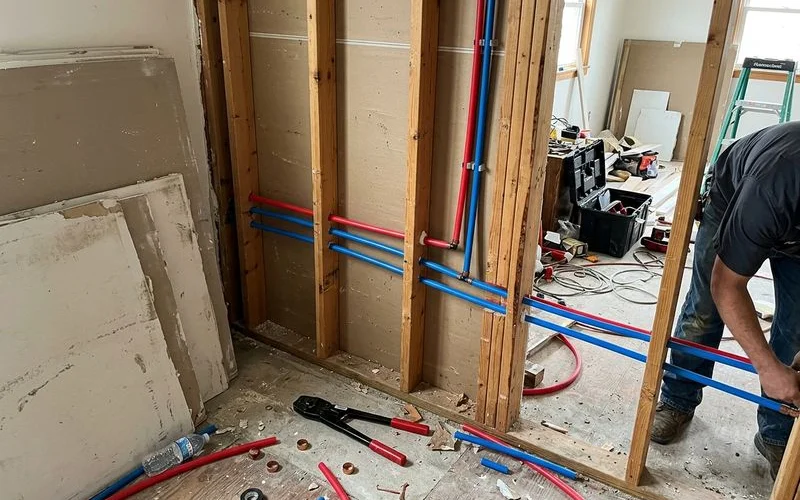
A complete repipe involves routing new PEX lines to every fixture and abandoning the decayed pipes inside the walls. Access points get opened at strategic locations rather than removing entire sections of drywall. Most modern installations use a central manifold arrangement. We set it up this way so each individual plumbing run can be isolated and shut off independently.
Old lines are abandoned in place or removed where practical. The new system is pressure tested to ensure zero leaks. Drywall is patched and textured immediately after the inspection passes. Our goal is to leave your home looking exactly as it did before the work started.
Most residential jobs finish in one to five days. Your water is usually only turned off for 8 to 12 hours during the critical connection phases. We give you a detailed timeline upfront so you know what to expect. The daily workflow includes several key steps to minimize disruption.
- Strategic wall access: We cut small, easily patchable holes instead of tearing down whole walls.
- Targeted shutoffs: Water is restored at the end of each working day.
- Immediate pressure testing: Every new connection is verified before the walls close.
- Clean finishing: The estimate covers all drywall patching and texture matching.
This work runs through the exact same crew as our leak detection and repiping service. The diagnosis and the fix are not two separate companies telling you two conflicting stories. You get consistent communication from the first inspection to the final drywall patch. We consider this streamlined approach the only right way to handle major plumbing overhauls.
Conclusion
Choosing the right path for a galvanized vs pex repipe secures your home against catastrophic water damage. Your plumbing infrastructure is the most critical system in your house.
Do not wait for a midnight pipe burst to force your hand.
Upgrading your pipes restores your water pressure and protects your property value. We are ready to help you plan a smooth, stress-free replacement.
Contact El Centro Plumbing Pros today to schedule a comprehensive assessment of your water lines.